The operations platform for keeping an aging parent at home.
Schedules, medications, alerts, and the hardware to tell you what actually happened — built for the family member already running the operation.
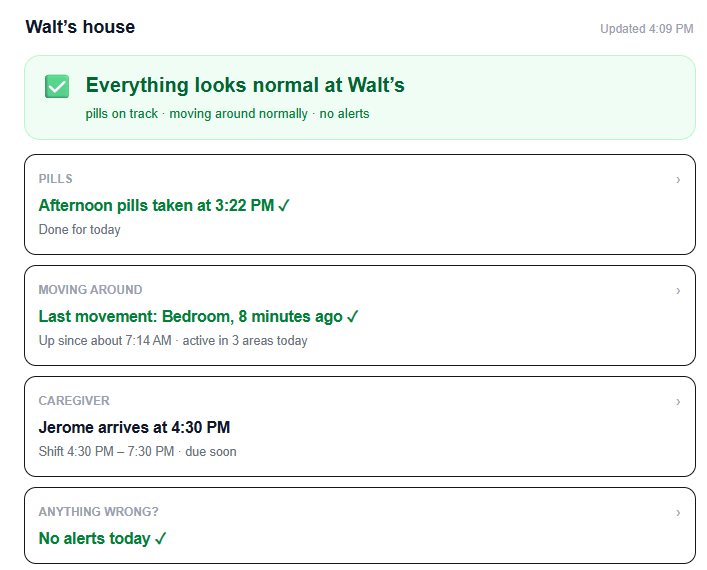
Schedules, medications, alerts, and the hardware to tell you what actually happened — built for the family member already running the operation.
Caregivers across multiple funding sources. Medications across multiple pharmacies. A schedule that breaks every time someone calls out. A doctor who wants to know what changed. Most of it lives in texts and in your head.
The work has a name in other industries. It’s operations — coordinating people, tracking what got done, knowing what’s coming. Almost no one acknowledges that’s what family caregiving has become. There’s software for running a small business and software for running a household, and nothing built for the household that has effectively become a small business.
Medication Diary is that missing piece. It replaces the spiral notebook, the group texts, the shared calendar that nobody updates, and the agency portal you never log into — with one platform that holds the whole operation in one place, and the hardware to tell you what’s actually happening when you’re not there.
Most systems ask the caregiver. Ours knows. The hardware sits quietly in the home and gives the family a ground-truth view of the day — medications taken, motion through the rooms, alerts when something needs attention. The software ties it all together: the caregivers, the schedule, the household, the doctors. One place. One view. One set of facts everyone’s working from.
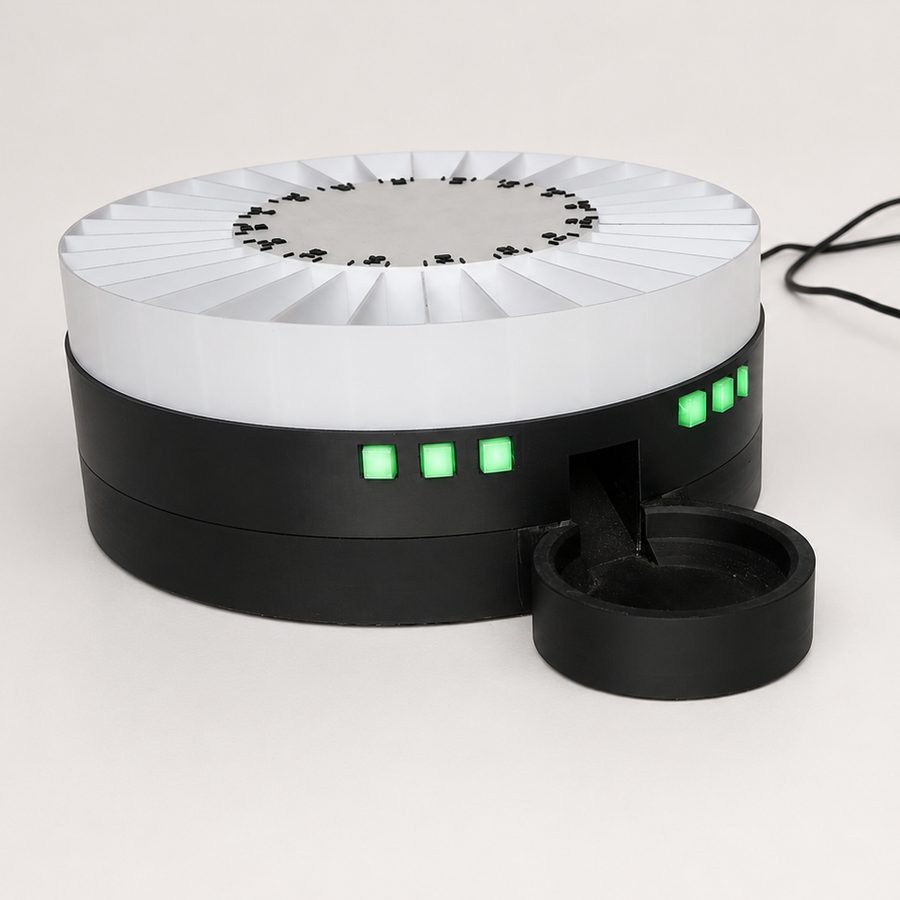
Records when the pill was actually picked up — not when the alarm went off. Refill workflow, schedule autonomy, and notifications when something doesn’t add up.
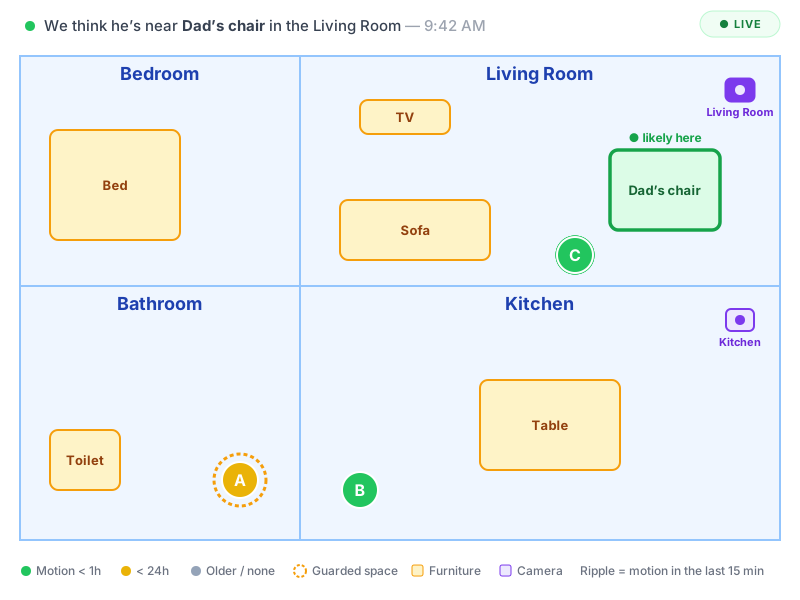
Quietly map the rhythm of the day. When your dad has been up since 6. When the bathroom hasn’t been used since lunch. You draw the home once in the app — rooms, his bed, his usual chair — and the dashboard answers in plain words: “We think he’s near his chair in the living room.”
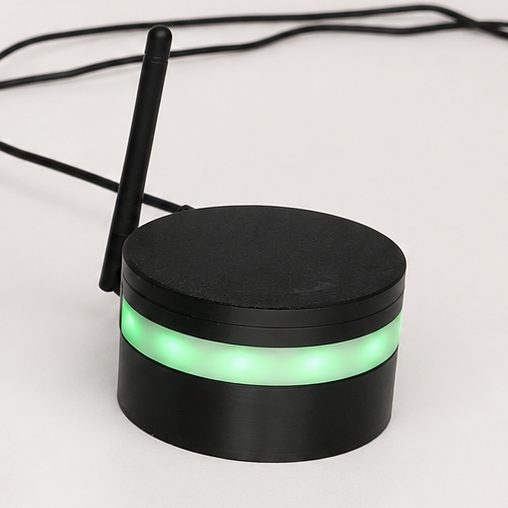
Coordinates everything in the home and routes alerts to the right person in the family — not to a generic call center. Quietly does the work in the background, lights up only when something needs attention.
The system also includes an emergency clicker and a camera that takes a still snapshot — never a recording, never audio — when something happens that needs visual context. The camera is optional; some households want it, some don’t. Both work fine.
Most of what we do day-to-day is quiet. The system runs, the data accumulates, the schedule gets coordinated. Where the value spikes is at the disruptions — a hospital stay, a new diagnosis, a caregiver who quits, a fall. These are the moments the existing tools have nothing to say about, and they’re the moments families need help most.
The discharge nurse hands you a binder. You start a new caregiver schedule from scratch. The medication changes don’t reach the aide. The first 72 hours at home are improvised on no sleep.
The discharge nurse gets a one-page summary of his baseline care. The caregiver schedule auto-ramps to recovery hours. The dispenser knows the new medications by the time he gets home. You walk in already knowing what changed.
You spend the first three shifts re-explaining everything. You watch the clock to see if she showed up. You realize after a week that nobody told her about the bathroom routine.
She gets a handoff log of the last seven days and a written care plan before she walks in. The system tells you the moment her shift starts and ends. The continuity carries across whoever is on.
He’s a little less active. He sleeps a little later. He takes the medication a little later. You don’t notice because it’s gradual. Six months later something has changed and you can’t pinpoint when.
The trend is visible. The system has months of his baseline and shows you what’s drifting. You catch it early enough to ask the doctor about it — months before it would have surfaced as a crisis.
Most family-coordination tools assume there’s one primary user. The reality of most families is messier than that — one sibling runs the schedule, another helps with the technical stuff, a third lives across the country and wants to know dad is okay without being in the daily texts. The system works for all three at once, with different views, different defaults, and different permissions.
Operational, dense, the daily dashboard. The full schedule, the open shifts, the day’s doses, the inventory the caregivers have flagged. The notifications that need her attention and not the ones that don’t.
Visibility without intrusion. The weekly summary, the alerts that warrant a second pair of hands, the technical detail when something needs his attention. He sees enough to be useful without being in the way.
The ambient indicator sits on a counter or shelf at her house. It changes color quietly as things change at home. She doesn’t have to log in to know everything’s fine — or to know when it isn’t.
About the ambient indicator. One of the things in our product that nobody else has. It’s the same device as the base station in the parent’s home — but it sits in the remote family member’s home, and its colors mirror the family dashboard in real time. Green most of the time. Yellow when something needs attention. Red when something is wrong. And when the emergency button is pressed at the parent’s house, this device doesn’t just change color — it sounds, in her house, within about a second. It removes the cognitive cost of staying connected: she doesn’t have to remember to check, and she can’t miss the moment that matters. Every family member who wants one can have one.
In a category where every product over-promises, it matters to be specific about what we don’t do.
The button is one of fifteen things we do. If you’re looking for a pendant and a call center, there are companies that do that for $30 a month and do it well. That’s not us.
We coordinate the ones the family already has — or helps blend across paid agency staff, private hires, family fillers, and volunteers. We don’t supply caregivers. We make the ones you have work together.
The system gives clinicians better context to make their own. We don’t diagnose, we don’t predict medical outcomes, we don’t replace the doctor’s judgment. We make the doctor’s twelve minutes more useful.
The camera takes a still snapshot when something needs visual context — never a recording, never audio. The privacy posture of the system scales with the patient’s situation, controlled by the family. Early on, it’s quiet. Later, when more is at stake, the family can choose for it to do more. Never the other way around.
We extend the runway that exists. We don’t extend it forever. There will come a point where the right answer is a different level of care, and we’ll tell you that honestly when we see it.
Assisted living runs $6,200 a month — if your father still qualifies. Memory care and nursing homes run more. And if he’s home with caregivers, those hours cost $35 each: $8,500 a month for daytime help alone, far more around the clock. Every month he stays in his own home is a month of his life he gets to keep — and every caregiver-hour that goes further is money the family doesn’t spend.
Medication Diary is a monthly subscription per household, plus a one-time setup fee that covers the hardware and the team install. The numbers aren’t on this page because the right place to talk about price is on a call, after we understand whether we’re a fit for your situation and you understand whether we’re worth what we cost.
A single week of a caregiver’s hours costs more than a year of us. The math works for most families. The question is whether the product works for yours.
We’re a small group of builders — engineers, designers, and people with clinical backgrounds — who started Medication Diary because we needed it ourselves. Most of us have an aging parent at home, or have helped care for one. The product is the thing we wished existed when we were the ones running the schedule.
The hardware platform underneath has been shipping in other products for several years, so we’re not learning to build hardware on your father. The software is built specifically for elder care at home, drawing on the clinical experience inside the team to make sure we’re honest about what families actually need versus what sounds good in a brochure.
We’re currently installing in a small number of households at a time so we can learn from each one before we open broader availability. If you’re not in that group yet, sign up below and we’ll let you know when we’re ready for you.
If your situation sounds like the one this product is built for, we’d like to talk. The form below asks the kinds of questions a first conversation would open with. There’s no obligation; it’s how we figure out together whether we’re a fit.